
Your space is always speaking. Make it say something beautiful.
In feng shui, your environment is considered a third skin —
after your body and your clothing, the space around you
is always in conversation with your energy.
This is not about expensive renovations or starting over.
It is about noticing what your home is already saying — and gently, intentionally,
beginning to let it say something better.
Light. Texture. Flow. A surface cleared. A window dressed.
The small acts of curation that tell your nervous system: this is a beautiful life.
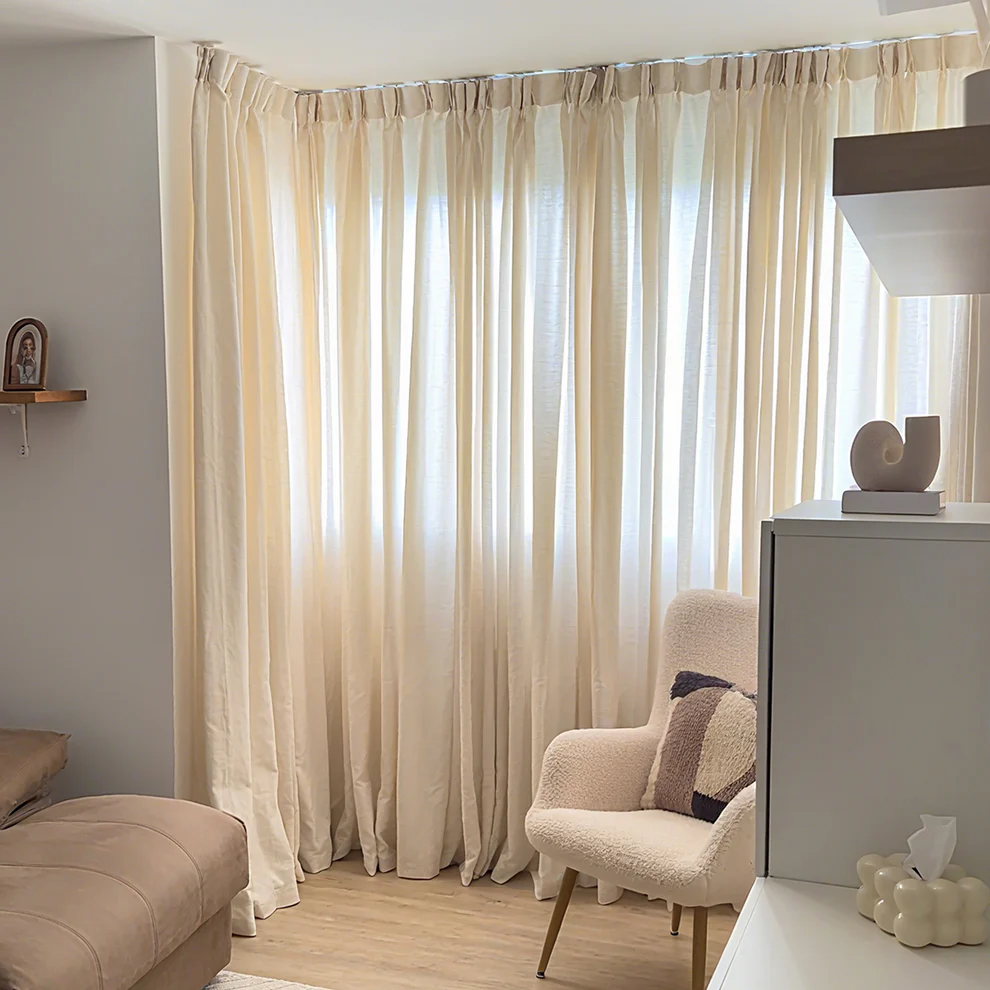
In feng shui, windows are the eyes of the home. How you dress them determines how energy — and light — enters your life. Linen is considered the ideal window fabric: it softens without blocking, filters without hiding, and breathes with the room rather than against it.
The light that enters your home is the first thing that sets the mood.
You wake up and the room is already telling you something.
Harsh, unfiltered light — and something in you braces before the day's even begun. Soft, golden light through linen — and the room holds you a little longer. That's your nervous system, reading its environment before you've had a single thought.
Natural linen softens without hiding. Floor-to-ceiling fabric elongates a room, says there is space here. Hang them high, let them pool slightly — the easiest luxury you'll ever buy.
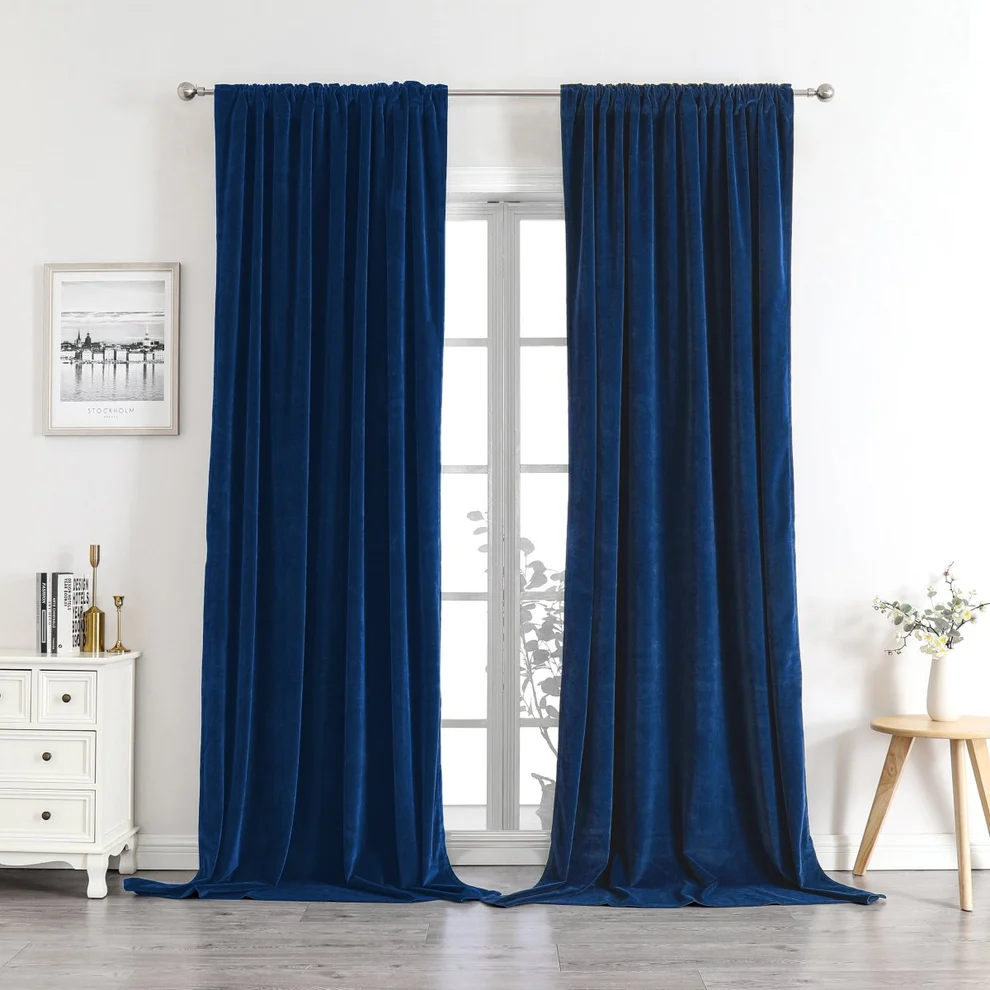
Complete darkness during sleep suppresses cortisol and allows full melatonin production. Studies show even small amounts of ambient light — a street lamp through thin curtains — reduce deep sleep quality by up to 50%. The bedroom is a sanctuary. Treat it like one.
The bedroom does one job. Make sure your curtains know that.
The sleep sanctuary begins before you get into bed.
In feng shui, the bedroom is the most energetically protected room in the home — a space that belongs only to rest and intimacy. Light is chaotic. The street lamp. The neighbour's porch. The blue dawn at 5am when your body isn't ready.
True blackout is one of the highest-value upgrades you can make to your sleep — and one of the most beautiful ones too. Close them. The world will still be there in the morning.
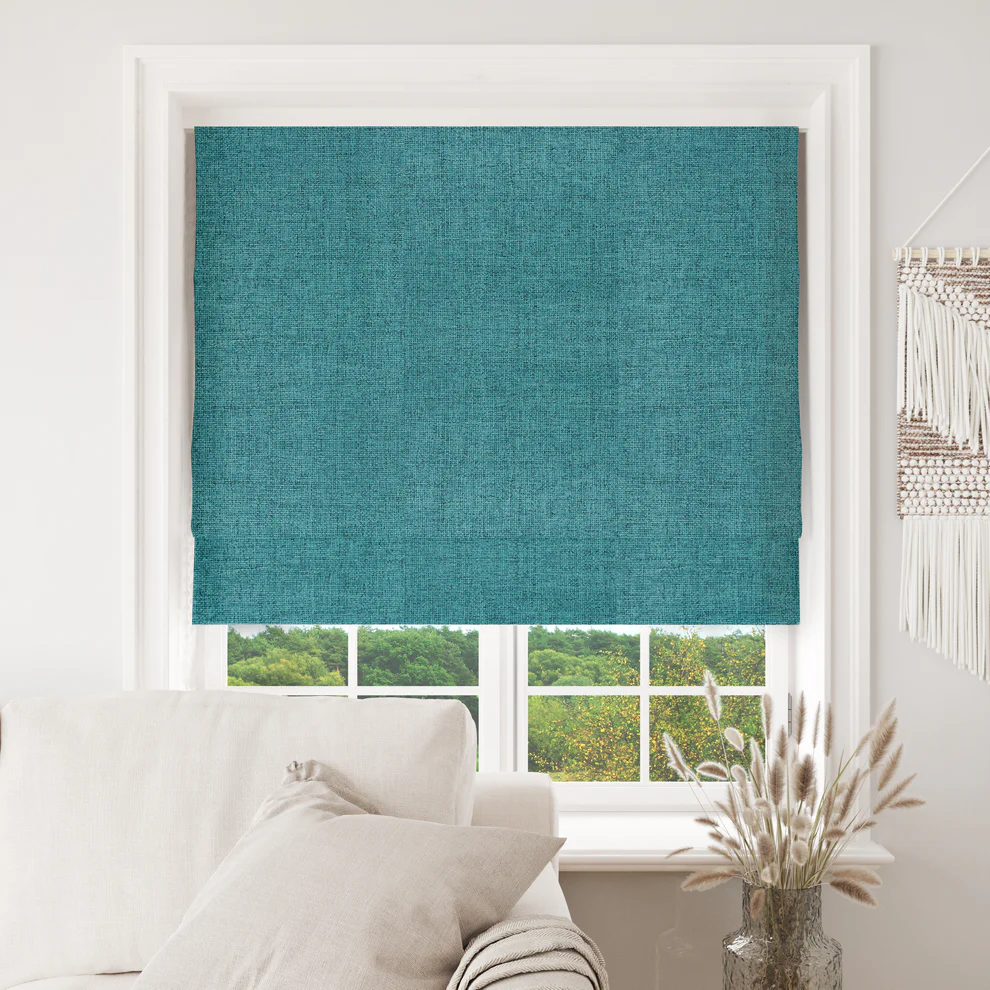
Roman shades are one of the oldest window treatments in recorded history — used in ancient Rome to filter dust from the Colosseum. Their clean horizontal fold creates visual order and calm, which feng shui associates with mental clarity and reduced decision fatigue.
Clean lines. A room that thinks straight.
There's a reason a beautifully styled room feels easier to be in.
Visual noise — mismatched fabrics, the cheap horizontal blind, the curtain rail that's been wrong since you moved in — registers as stress. Not consciously. Just quietly, constantly, underneath everything else.
Roman shades are the editing of a room. They fold flat, sit neat, control light precisely — the clean line that lets the rest of the space breathe. Order your space. Order your mind.
You don't need to redecorate. You need to edit.
Feng shui is not mystical — it is the art of intentional arrangement.
Here is where to start.
In feng shui, the entrance is where all energy enters. One cleared, welcoming surface changes the feeling of your whole home. Remove what doesn't belong there. It takes six minutes.
Bare windows are an unfinished sentence. Even a simple sheer — the softening of the light — changes the energy of a room from transient to intentional. You are staying. You are making it yours.
Charity shops. Markets. Your own forgotten shelf. Find one beautiful object and give it a place of honour. Your home should contain things that make you feel something when you see them.
In feng shui, a rug anchors the energy of a space and defines intention. A floating sofa with nothing underneath it says the room hasn't decided what it is. A rug says: this is a place where we land.
A plant. Even a small one. Living energy in a space — something breathing, growing — shifts the entire atmosphere. A pothos. A palm. A single stem of eucalyptus in a glass of water. That is enough.
A candle in the evening is one of the oldest signals humans have used to mark the shift from day to rest. It tells your nervous system: this part of the day is different. It costs almost nothing. It changes everything.
Forget which direction to face your bed. In a house with five people and one bathroom, nobody's facing where the map says they should. Here's what actually matters.
Before you decorate anything, ask what a room is actually for. Not what it looks like on Pinterest — what happens in it.
Is it a yang room — work, activity, movement, the place you need clean edges and an easy wipe-down? Then it wants good light, excellent organisation, and furniture that earns its keep. Function first, beauty follows.
Is it a yin room — sleep, chill, sometimes slow creative work? Then it wants soft furniture, soft lighting, cushions, plants, soothing colour, books, and absolutely nothing that feels like a to-do list.
Mixing the two is how you end up with a lounge that feels like an office and a bedroom that never quite lets you switch off. Pick the job. Dress accordingly.
Your bedroom is always a yin room. No exceptions, no laptop "just for five minutes," no ironing pile that lives on the chair. It's for sleep and romance, full stop — its whole job is to comfort and support you enough that you get restful sleep, sweet dreams, and wake up ready to crush the day.
Practically: put a solid wall behind your headboard rather than a window, and try not to sleep directly in line with the door. Keep under the bed empty, or limited to soft things like spare linen — nothing sharp, broken, or "in progress" lives under where you sleep.
A mirror above the dining table is a classic feng shui move for abundance — it doubles the food, doubles the gathering, doubles the sense of plenty. Cheap trick. Works every time.
More broadly: arrange your furniture to maximise both space and flow, and hunt down the dead corners in your home — the spots nothing ever happens in. Wake them up with movement, sound, or reflection: wind chimes, a small fountain, a mirror, tall plants or vertical lines that draw the eye up, a pet that wanders through, a TV or speaker that actually gets used. Energy needs somewhere to go. Give it a route.
And keep the front door clear — nothing piled in front of the one door everything, including you, comes and goes through.
If you want to see how a rearrange might look before you haul furniture around, the room-planning tools on the Organise page can do that for you.
Avoid open storage. It looks lovely on day one, and by week three you're dusting every single object on it for the rest of your life. Keep storage simple and matched to the actual task — a place for a thing should make putting it away easier, not add another decision to make.
Fix or get rid of anything broken. Repaint, revarnish, replace where it's tired. Clutter isn't just a mental weight — it physically makes cleaning slower, and less stuff means less to move before you can even start.
The real rule: make sure everything your eyes fall on is beautiful. Not all at once — unless you've won the lottery — but gradually. Thrift stores are your best friend here; swap out one ugly, broken, or "it'll do for now" thing at a time.
For the actual storage pieces — bins, drawer carts, closet systems — that's all live on the Organise page now. This is the philosophy; that's the shopping list.
Place furniture so windows stay uncovered, drawers and doors open fully, and nothing sticks out into a walkway waiting to catch your shin. Before you buy anything highly decorative, ask how hard it'll be to keep clean — if you're not someone who loves dusting intricate detail, don't bring intricate detail into your home.
Fix the squeaky door and the sticky drawer. Small daily friction adds up to a house that feels like hard work.
Keep a plant by your front door. Close the toilet lid before you flush. Clean your drains, fix your leaky taps. And whatever's just inside and just outside your front door — keep it tidy and clear, always. It's the first and last thing your body registers every single time you come home.
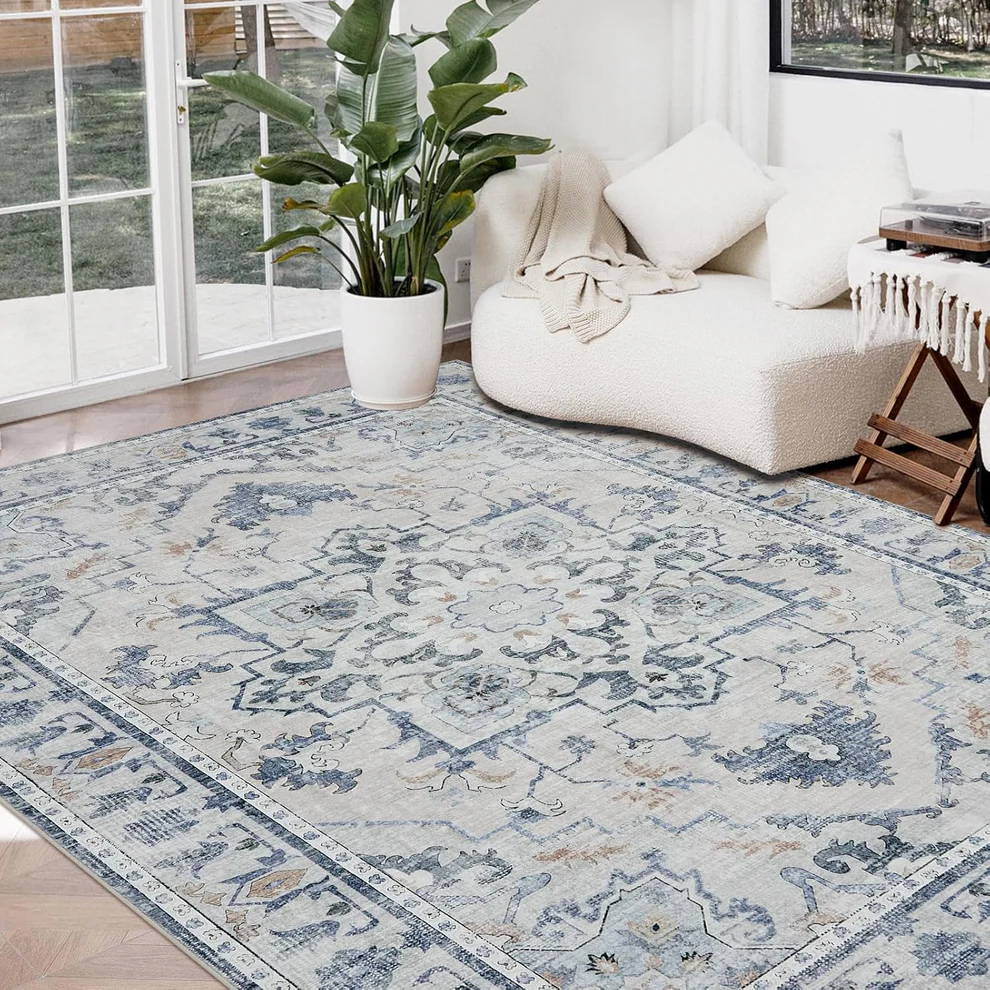
In classical feng shui, a rug represents Earth energy — the element of stability, nourishment and groundedness. A room without a rug is energetically unanchored. Place it so all furniture legs touch the edge, or at minimum the front legs: this connects each piece to the room's foundation.
A room without a rug is a room that hasn't committed.
There's a reason a well-rugged room feels so much more like a home.
A rug makes a decision. This is the room. This is where we gather. Floating furniture — a sofa with nothing underneath — registers as unsettled, as not quite arrived.
It grounds your space, absorbs sound, adds the texture a room needs to feel finished — not decorated, finished. This is the foundation everything else sits on.
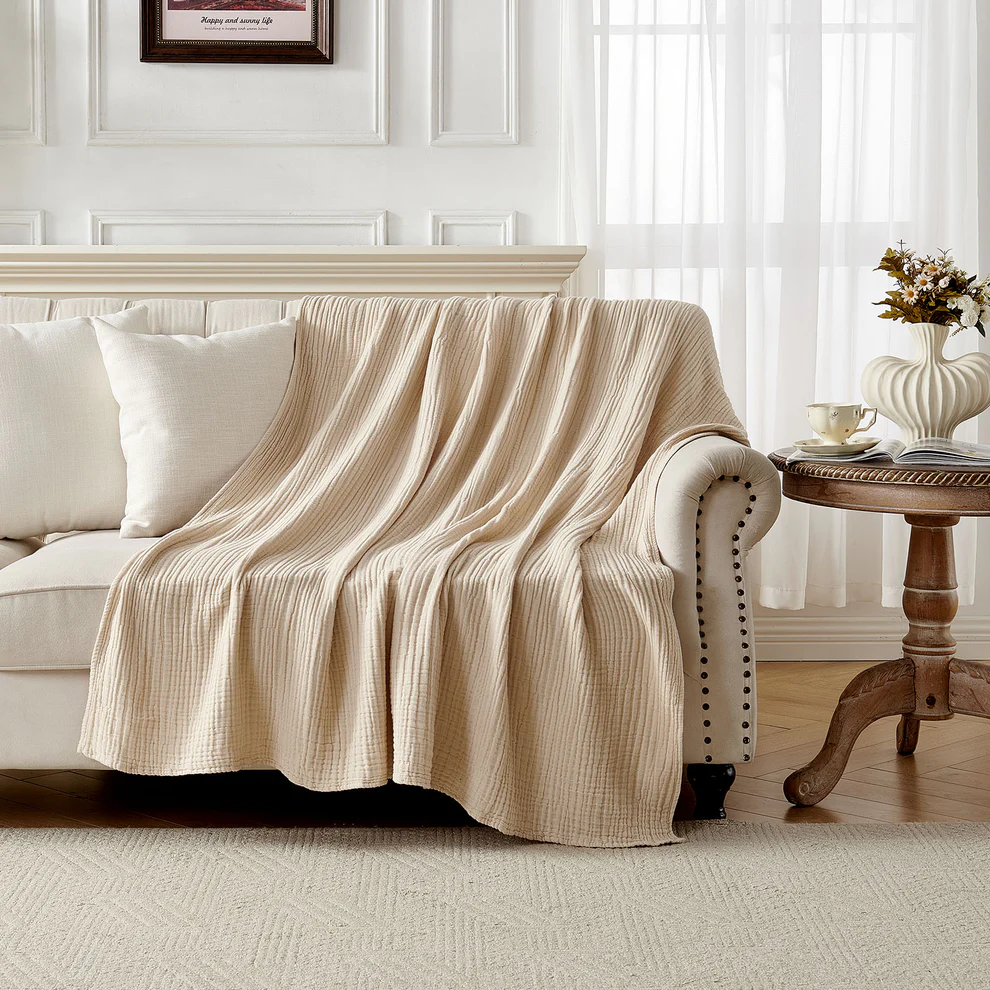
Texture is the most underestimated element of interior design. The human eye reads textural contrast as depth and warmth — a monochromatic room with varied textures reads as more sophisticated than a colourful room with flat, uniform surfaces. A throw does more visual work than most people realise.
The finishing touch that makes a room say: stay a while.
A sofa without a throw is a sofa waiting to be used.
A sofa with a throw — folded just so, or pooled at one end — is an invitation. Come. Sit. Stay a while.
It's the last five percent of a room — from furnished to felt. Also the easiest seasonal refresh you own: linen and cream in summer, chunky weave and weight in winter. Drape it. The room will thank you.
The space is beautiful. Now — what's next?
Some links on this page are affiliate links. If something calls to you, I may earn a small commission — at no cost to you, ever.